
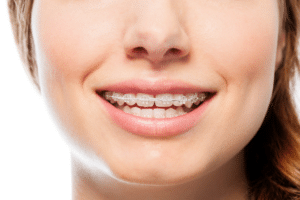
Ceramic brackets are clear or tooth-colored, while metal brackets are usually made from stainless steel. Both can move teeth when they fit the patient’s bite and treatment plan.
Dr. Vahid Babaeian looks at tooth position, bite, appearance goals, and daily habits before recommending an appliance. As a board-certified orthodontic specialist, he can explain which option may fit a patient’s needs.
How Are Ceramic and Metal Brackets Different?
The main difference patients notice is appearance. Metal brackets have the traditional silver look, while ceramic brackets use clear or tooth-colored material that blends more closely with the teeth.
Both types are made to stay attached to the teeth while an archwire helps guide tooth movement. Ceramic braces may appeal to patients who want fixed braces that are less noticeable.
Care is important with either option. Hard foods, chewing on objects, or a direct hit to the mouth can damage brackets or wires. Following the orthodontic team’s instructions can help protect the appliance and keep treatment moving as planned.
Do Both Types of Braces Move Teeth the Same Way?
Yes. Both use brackets and an archwire to place gentle, steady pressure on the teeth. Over time, this pressure guides the teeth toward their planned positions.
Either option can help with crowding, spacing, rotated teeth, uneven tooth positions, and some bite problems.
The orthodontist also looks at how the upper and lower teeth fit together, how each tooth needs to move, and where the brackets will go. Ceramic braces may work well for some patients, but they are not the right choice for every treatment plan.
In some cases, an orthodontist may use ceramic brackets on more visible teeth and metal brackets in other areas. Whether this approach is available depends on the patient’s treatment needs and the options offered by the orthodontic practice.
How Does Caring for Ceramic Braces Differ?
The basic cleaning routine is similar for ceramic and metal braces. Patients need to brush around the brackets, under the wire, and along the gumline. They also need to clean between the teeth.
Clear or tooth-colored braces can make regular cleaning especially important for appearance. Plaque and trapped food around the brackets can make the braces more noticeable.
Floss threaders, small interdental brushes, orthodontic flossers, or water flossers can help reach areas around the appliance.
Good cleaning also protects the teeth and gums during treatment. Brackets and wires create small spaces where plaque and food can collect, so patients need to clean these areas with care.
What Foods and Habits Should You Watch?
Hard, sticky, or very crunchy foods can damage brackets or wires. The American Association of Orthodontists offers more guidance on foods to avoid with braces and ways to prepare food during treatment.
Ice, hard candy, popcorn kernels, nuts, sticky caramel, and very hard bread are examples of foods that can cause problems.
Many foods are still fine with a few changes. Cut apples and carrots into small pieces. Remove corn from the cob, and cut meat away from bones instead of biting into it.
Nonfood habits matter too. Avoid chewing pens, pencils, fingernails, bottle caps, or other hard objects. Do not use your teeth to tear packages or remove tags.
These habits can damage brackets, wires, and natural tooth enamel. The same basic food precautions apply whether the brackets are ceramic or metal.
Can You Play Sports While Wearing Braces?
Yes. You can keep playing sports while wearing braces.
For sports where you may get hit in the face or mouth, a mouthguard made to fit over braces can help protect your teeth and appliance. It also helps protect the lips and cheeks from brackets and wires.
A mouthguard is especially important for contact sports and other activities where a blow to the mouth is possible.
A guard made before braces were placed may no longer fit well once treatment starts or as the teeth move. Ask your orthodontic team which mouthguard is right for your current appliance.
What Should You Do if a Bracket Comes Loose?
Tell the orthodontic office if a bracket becomes loose or damaged.
If the bracket is still attached to the wire, follow the instructions from your orthodontic team. Orthodontic wax may help cover a rough area that rubs against the cheek or lip until the office can advise you.
Do not try to glue the bracket back onto the tooth.
A loose bracket does not usually mean treatment must start over. The orthodontic team can determine when it needs to be repaired so the tooth can continue moving as planned.
If the same area has repeated problems, Dr. Babaeian can check whether bite contact, food habits, or another issue is putting extra stress on the appliance.
Which Type of Braces May Be Right for You?
Neither type of braces is best for every patient. The choice depends on your bite, the tooth movements needed, bracket placement, appearance goals, and daily habits.
Ceramic braces may appeal to patients who want fixed braces that blend more closely with their teeth. Metal braces provide another fixed treatment option and may be recommended when they better fit the treatment plan.
The best choice is the one that gives the orthodontist the control needed to move your teeth while also considering your preferences.
At Brace Connection, Dr. Babaeian can compare ceramic and metal braces based on your bite and treatment goals. Schedule a consultation in Downey, CA to learn which option may fit your needs.